

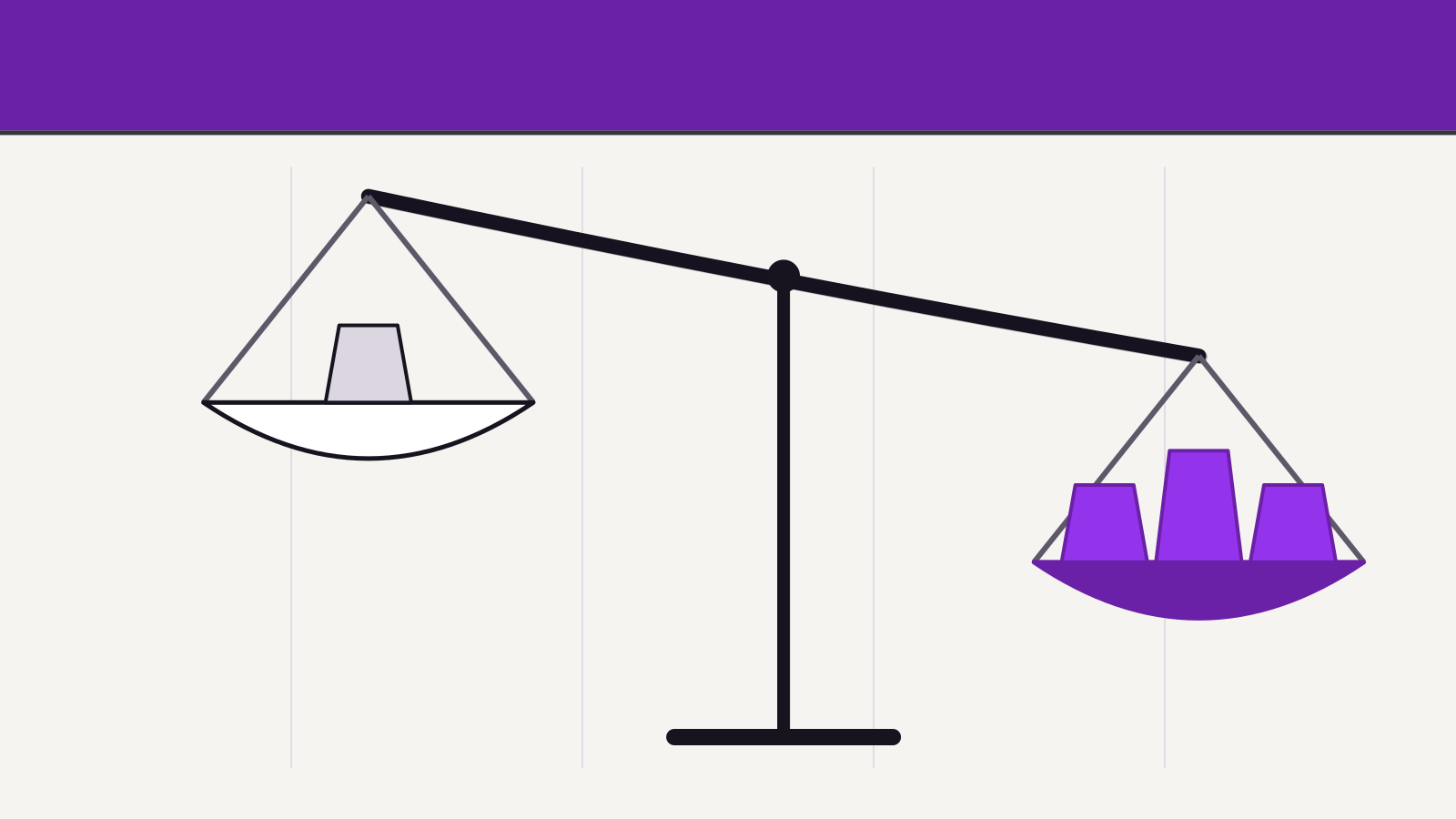
This week’s panel
25 contributorsRick Elmore · Vaibhav Kakkar · Sean Smith · Tzvi Heber · Ryan Hetrick · and 20 more

Rick Elmore — CEO, Simply Noted
Require Designated Leads and Advance Briefs
We cut meetings by treating calendar time like limited inventory, not an unlimited chat room. At Simply Noted, a quick standup slowly became a 45-minute status tour, then a second meeting to decide what the first one surfaced. The change that stuck was simple: any recurring meeting without a named decision owner and a written agenda the day before gets deleted or becomes an async update. People write a short recommendation first. We meet live only when two real options need a call. Alignment got better, not worse, because the writing forced clarity before anyone spoke. The standing rule is one live meeting per topic, then the owner posts the decision in the same thread as the brief. If someone asks for a second meeting on the same decision, we treat that as a process bug in the first session, not a reason to book more time. Cutting meetings only works when you replace them with clearer ownership and a written trail, not with more Slack noise that pretends to be progress while decisions stay fuzzy.

Vaibhav Kakkar — Founder and Group CEO, Digital Web Solutions
Convene Only When Triggers Demand Action
The habit that changed everything for us was replacing recurring meetings with trigger-based meetings. A recurring meeting assumes the topic deserves time every week, even when nothing has changed. A trigger-based meeting only happens when a decision is blocked, a metric moves outside its range, or a deadline is at risk. That removed automatic calendar clutter and gave everyone more focus.
We agreed on clear triggers before the work started. We documented them so everyone knew when a live conversation was necessary. That predictability mattered more than meeting frequency and helped people work without constant interruptions. We spent less time talking about work and more time making decisions with clarity and confidence.

Sean Smith — Founder & CEO, Alpas Wellness
Cap Standing Hours and Eliminate Relay Work
We limited how many hours our teams could spend in standing meetings and required that, if a manager wanted to add another recurring meeting, they had to remove one. The impact of that limitation was greater than any audit we did as an organization, as it forced the trade-off to occur within view of all stakeholders rather than occurring quietly on a calendar.
The indicator that your organization has too much going on isn't about how many people are attending meetings, but about the number of times the same message is being delivered. For example, I began paying attention to when the same update was being presented in three locations: in the daily clinical huddle, during operations discussions, and to me. This isn't about alignment; this is about someone doing relay work. We collapsed these updates into one 15-minute cross-departmental session with just one representative from each department, and the departments no longer told each other what was happening.
Alignment actually increased due to the fact that there was now a written record. Once a week, one page, same fields: What happened? What's stuck? Who needs to make a decision? It took most people less than five minutes to read it at their own speed. Recent industry surveys validate this, as more than half of professionals say they leave meetings without clarity regarding next steps or who owns the follow-up. So more talk wasn't the answer.
I cut my own weekly leadership call first. In a treatment setting, an hour in a conference room is an hour off the floor, and clients notice that before any spreadsheet does.

Tzvi Heber — CEO, Ascendant New York
Declare Final Rulings Before Departure
We canceled a lot of non-decision meetings, basically “reassurance” meetings. A leader would feel nervous or unsure if everything was okay with an issue, then suddenly there was a recurring meeting scheduled and people showed up because their attendance meant they cared.
When I first entered the social services field as a drug and alcohol counselor, I recognized this behavior in my own clients as well as in other patients: anxiety finds rituals. Identifying that in the group helped eliminate unnecessary meetings.
The biggest time-saving measure we took: Nothing is closed (i.e., nothing ends) unless the final decision has been stated aloud in the room in simple language using only one person’s name and one date, with the decision being read back to each attendee before anyone stands to leave. The actual time spent on creating follow-up meetings caused most of the calendar creep and not the actual meetings themselves.
To gain alignment, instead of adding additional cross-functional calls, we added questions to existing work being done. Nursing, clinical and admissions have always worked together around client issues; therefore, operational decisions affecting all three departments will be included in the same discussions.
My first mistake occurred when I attempted to answer a communication issue between two departments by implementing a new weekly leadership call. The call lasted for many months and ultimately did very little decision making. Alignment means knowing who makes the decisions, not just being present in the room where they are being made.

Ryan Hetrick — CEO, Epiphany Wellness
Put Clear Resolutions in Every Calendar Invite
The approach which helped save us the most time: when you put something on your calendar, you have to have the decision made already and stated clearly at the beginning of the invite. Do not use this section for topics. Use this section to state a clear decision (as a question) that someone in the room has authority to make. When we cannot clearly articulate a decision, then it should be treated like an update. Updates are entered into a common document which individuals review during their own time.
This approach arose from an experience with pain. Our organization operates facilities in New Jersey, Tennessee, and Massachusetts, and for approximately six months our clinical and admissions leadership team sat through the same recurring weekly call where they would discuss census numbers amongst themselves. No one actually decided anything while engaged in these meetings. However, all of the real decisions were being made in hallway discussions, and those conversations were never formally documented.
As such, we separated the information flow from the decision-making process by design. All information will continue to flow through writing. All decisions will occur live, and there will be a named person responsible for the decision. After the meeting occurs, the person who owned the decision will send a single-paragraph summary of what was decided and who will do what. This single paragraph will represent alignment. This will travel much farther than any meeting would.
In addition to splitting the information flow from decision-making, we reduced the default length of all meetings to 25 minutes and eliminated the invitation of others simply to provide visibility. Visibility is provided via the post-meeting summary.

Ed Hones — Attorney At Law, Hones Law Employment Lawyers PLLC
Set Scope, Evidence, and Time Up Front
I cut meetings by enforcing one simple rule before anything is scheduled: clarify the issue to be decided, define the scope of possible solutions, and set an allotted time. If those three items are not clear, the matter is handled by email or during an existing check-in. I also require attendees to do their research before joining so presentations are brief and focused. This structure reduced meeting time while keeping decisions on track because everyone arrives prepared and understands the purpose and expected outcome.

Max Shak — Founder/CEO, nerD AI
Demand Purpose and End With Accountability
When meetings start taking over the calendar, I don't immediately try to eliminate them. I first ask a more uncomfortable question: "What are we actually using this meeting to accomplish?"
I've been in situations where a meeting that was originally created to solve a specific problem gradually became a weekly status update. Ten people would spend an hour listening to information that could have been shared in a few paragraphs. The meeting still felt productive because everyone was busy, but very little was actually being decided.
The biggest change I made was requiring every meeting to have a clear purpose before it goes on the calendar. I generally think of that purpose as one of three things: making a decision, solving a problem, or having a conversation that genuinely requires people to be together. If the purpose is simply sharing information, I try to handle it asynchronously.
I also became much more deliberate about ending meetings with ownership. Before everyone leaves, there should be clarity around what was decided, who owns the next action, and when it needs to happen. That small habit has prevented countless follow-up meetings because people aren't spending the next week trying to figure out what happened in the previous one.
I've seen this work across different teams and industries because the underlying problem is usually the same. People don't necessarily have too many meetings; they have too many meetings without a clear job.
For teams trying to reduce calendar overload, I'd start with a simple experiment: cut recurring meeting times in half and require a specific outcome for every remaining meeting. If alignment starts slipping, adjust from there rather than automatically putting another meeting on the calendar.
My goal isn't to have fewer meetings just for the sake of having fewer meetings. It's to make sure the time we spend together produces something that couldn't have happened just as effectively without the meeting.

Joe Spisak — CEO, Fulfill.com
Ban Status Calls Until Options Mature
I fired half our standing meetings the week we hit $8M ARR and nobody noticed. Actually, that's wrong—people noticed they suddenly had time to work again.
The rule I implemented: no meeting can exist without a decision to be made. Status updates got banned entirely. If you're just sharing information, write it in Slack or send a Loom. Meetings became decision-making sessions only. Before scheduling, you had to answer: what specific decision needs multiple people in real time to resolve? If you couldn't name it, the meeting didn't happen.
When I was scaling my fulfillment company, we had this nightmare weekly ops meeting with twelve people that ran ninety minutes. I finally asked everyone to write down what decision they personally made in that meeting. Eight people wrote nothing. We killed it and replaced it with a five-minute daily standup for the four people who actually needed to coordinate on warehouse capacity decisions. The other eight got a weekly email summary.
The counterintuitive part? Fewer meetings meant faster decisions. When meetings are scarce, people come prepared because they know they won't get another shot for a week. We started requiring a pre-written decision document twenty-four hours before any meeting. Just that change cut our average meeting time by forty percent because people had already worked through the fuzzy thinking on their own.
At Fulfill.com now, my calendar has maybe six meetings a week. Everything else is async. The test is simple: if we can't make a clear decision in thirty minutes with the right three people in the room, we're not ready to meet yet. Do more homework. Meetings aren't for thinking—they're for choosing between options you've already thought through.

Assaf Sternberg — Founder & CEO, Tiroflx
Separate Reporting From Live Choices
I cut meetings by separating status from decisions. Status can usually be written. Decisions need discussion. In manufacturing execution, updates about supplier status, documents, inspection timing, or shipment progress can live in a shared system. But quality risks, compliance gaps, production delays, or client tradeoffs need live attention. The rule is simple: if no decision is needed, do not schedule a meeting. That keeps collaboration strong because meetings become places where work moves, not where updates are repeated.

Olga Kokhan — CEO, Tinkogroup
Limit Attendance and Set Explicit Endpoints
When meetings begin to dominate the calendar, I ask a simple question: Does this meeting need to make a decision? Or could the information be communicated in another way?
One change that has made the most significant difference for me is making meetings decision-oriented. I don't usually book a meeting if there isn't a specific decision or outcome needed. I often handle status updates, routine questions, and information that people just need to read asynchronously.
For meetings that do take place, I try to set out the purpose and expected outcome in advance. People need to know why they are there and what they need to decide by the end. I also don't think everyone should be in every meeting just because they are part of the wider team. This has helped me cut meeting time but not lose alignment. In fact, I've found that clear ownership and written follow-ups often create better alignment than adding another recurring meeting to the calendar.

Bharat Sharma — Delivery Manager, Enterprise CX Solutions, eSignly
Cancel Gatherings After Pre-Read Consensus
Alignment is a byproduct of high-quality documentation rather than high-frequency interaction. When calendars become congested, it usually indicates that a team is using meetings as a crutch for poor writing and unstructured workflows. To maintain alignment while reducing volume, we treat live sessions as the last resort for resolving complex friction rather than the default setting for information sharing. By moving routine status updates to collaborative digital workspaces, we ensure that the basic transfer of facts is completed long before a live call begins.
The specific rule that reclaimed our time is the mandatory decision-need pre-read. For any meeting to remain on the calendar, the organizer must distribute a concise document at least 24 hours in advance that explicitly outlines the required decision and the supporting data. If the attendees reach a consensus through comments on that document before the scheduled start time, the meeting is cancelled immediately. This forces organizers to clarify their intent and prevents the common trap of holding a meeting just to define a problem.
This practice is especially vital for our distributed teams operating across different time zones, from our headquarters in Indore to client sites in London and New York. When teams stop treating meetings as the venue for getting informed and start using them exclusively for resolving conflict or finalizing strategy, alignment increases because the logic behind every decision is permanently documented. Protecting the calendar is not about working less; it is about ensuring that when we do speak live, the conversation is focused on high-value execution rather than simple administrative updates.

Sahil Agrawal — Founder, Head of Marketing, Qubit Capital
Sunset Recurrences Without a Named Mandate
And every company believes its own meetings are the necessary ones. Ours were. We crossed 50 people a while back and stayed remote, which is exactly the shape where a calendar fills up without anybody deciding it should.
The rule we landed on is that a recurring meeting has to name the decision it exists to make. Not a topic, an actual decision written at the top of the invite. Roughly 40 percent of them could not, so those became a written update in a channel where you are expected to reply within a day. The weekly 1-to-1s were left alone completely.
Alignment did not suffer the way I expected, though I think that is partly because the writing is better than the talking was. People edit themselves when it is on a page. I get through all of them before the first call on Monday.

Ben Frederick — Founder, Dr. Frederick's Original
Audit Repeats and Shorten Essential Slots
Sync for decisions, async for updates. That single split cut the most time out of my week, because most of what filled my calendar was people reading numbers out loud to each other. Status belongs in a written doc anyone can scan on their own schedule. If a discussion doesn't end with someone deciding something, I don't put a calendar invite on it.
The change that made it real was auditing every recurring meeting and asking what would break if it disappeared next week. A few would have broken alignment, so those stayed. Most wouldn't, so they got cancelled or rebuilt as a shared doc with comments. The ones that survived got a stated purpose, a pre-read, and a named decision to walk out with.
I also dropped the default block to 25 minutes. An hour invites tangents, and 25 minutes forces people to read the pre-read beforehand, because there's no room to get caught up in the room. The invite list stays limited to whoever owns the decision plus anyone whose expertise the decision needs.
Alignment held better afterward. Written updates are searchable, and a decision with a named owner is harder to quietly forget than one that happened verbally in a crowded call.

Joyshree Banerjee — Chief of Staff and Content Engineering Lead, VisibilityStack.ai
Replace Daily Standups With Friday Loom Reviews
We replaced daily standup calls with just one meeting every week on Fridays—a focused review of the week's agendas, wins, and learnings. For everything else, Loom handles it. A recorded walkthrough can be revisited as many times as the team needs, watched at the right moment rather than a scheduled one, and no one loses momentum to sit in a call. The time saved on coordination goes directly into execution.
One meeting a week. Every other update, async.

Brandon Kidd — VP Operations, DeltaV Digital
Center Regular Syncs on Blockers
When calendars get crowded, the biggest shift is to stop using the weekly meeting for status updates and use it only for decisions and blockers. We run a short weekly sync where the only agenda items are what is stuck, what needs a decision, and who owns the next step. Everything else moves to a monthly performance review and a quarterly planning session, so teams stay aligned without rehashing updates every week. That one rule keeps meetings brief while still ensuring the right people make the call and execution stays on track.

Lisa Bennett — Director, Sales & Marketing, DoJiggy
Reserve Afternoons and Record Commitments
I keep meetings in the morning and protect the afternoon for strategic work like content and SEO. That single boundary does most of the work. When a meeting can land at any hour, it will, and the thinking time gets chopped into pieces that never add up to anything.
The other habit is being honest about what a meeting is actually for. My team works remotely and we're in contact all day on Slack, so a status update doesn't need thirty minutes and six people. What does need live conversation is anything where people will disagree, or where I want to hear the hesitation in someone's voice before we commit to a deliverable.
Alignment usually breaks because a decision got made and never written down, not because a meeting was skipped. So when you cancel a recurring call, replace it with a short written update in the same channel and keep the same rhythm. People stay aligned on what they can read back a month later.

Carolyn Vasquez — Founder, Ready Rental Cleaning
Default to Written Briefings
The rule that worked for us is simple. No meeting happens unless a decision needs to get made that day. Status updates go into a shared doc, not a room. Our teams are inside homes on tight turnover windows between checkout and check-in. A standing meeting was never realistic for us to begin with. If someone can't be reached live, the update still has to make sense without them.
We cut recurring meetings down to one a week. That one covers scheduling conflicts and anything that came up on-site. Checklist changes and supply issues get written down instead, read on someone's own time rather than announced live.
The change was making the written update the default and the meeting the exception. That's what actually reduced time spent. Our one weekly meeting stays short because most of what would have filled it already got solved in writing first.

Sherif Koussa — CEO, Software Secured
Demand Facts for Well-Grounded Forums
The best meeting reduction rule was banning problem-solving in meetings that lacked the data needed to decide. Too many calendars fill up with conversations that are really placeholders for unfinished thinking. In technical teams, that often means debating priority before impact is measured, or debating risk before evidence is reviewed. Those meetings feel productive, but they usually generate another meeting.
I started pushing for a simple threshold: no decision forum without enough context to support an actual choice. Once that discipline is in place, the number of meetings drops naturally. The remaining ones become faster because everyone is reacting to facts, trade-offs, and decision criteria. That protects focus time while keeping delivery, governance, and stakeholder confidence moving in the same direction.

James Rudge — Owner, J&J Renovations
Settle Trade-Offs in a Weekly Pulse
We replaced status calls with one strict weekly operations pulse and one rule: writing settles updates; meetings settle trade-offs. The agenda covers blockers and decisions, while updates that writing can settle stay out of the room. Each decision leaves with one owner and a next step, keeping alignment in the record instead of another call. That change reduced interruptions while keeping sales, procurement, logistics, and the yard clear on what happens next.

Reid Breitman — Personal Injury Lawyer, Kuzyk Law Personal Injury & Car Accident Lawyers
Use Comment Windows for Real-Time Negotiation
I ask organizers to cancel any meeting if the expected outcome can be achieved through a structured comment period. A short document with a clear question gives people time to think, especially those who are less likely to dominate a live discussion. Responses are due by a defined hour, not whenever someone remembers.
That approach preserves a useful form of disagreement without turning every difference into a calendar event. Once comments are collected, the decision owner summarizes the reasoning and identifies any unresolved issue. Meetings are then reserved for the small number of questions that need real-time negotiation. Quiet review often produces sharper judgment than immediate verbal reaction.

Sarah Gray — HR Director, Cintra
Keep Live Rooms for People Judgments
Keep a meeting live only if a decision still needs people in the same room.
If the point is an update, put it in writing. Recurring slots crowd calendars because nobody wants to cancel the one meeting that later mattered. The test I apply is narrower: will anyone change a people decision if we sit together, or are we narrating work that is already done? Status moves to a written note. A hiring calibration or a difficult case still gets time in the room.
I run the internal people function at Cintra and the HR outsourcing work. Calendar habits are part of culture. If managers only meet to perform alignment, people learn that the live slot is theatre. Cut that, keep the rooms where a call actually has to be made.
David Fullmer — FOUNDER - CEO, FBC ROOFING
Clarify SOPs and Handoffs
One change that cut our meeting time without losing alignment was getting very clear and precise on everyone's SOP, so fewer questions had to be solved live in a meeting. When each team member understands their responsibilities, the goals, and how work hands off to the next person, you do not need as many check-ins to stay coordinated. We also made sure the communication structure was visible and understood, so people knew exactly where decisions should be made and who needed to be involved. That clarity keeps decisions on track and reduces the urge to schedule a meeting just to confirm basics.

Dennis Ryan — CEO, All in Solutions
Auto-End Recurrences After Sixty Days
Every recurring meeting on our calendar has an expiration date. Sixty days, then it dies unless the person who owns it asks to renew it and says what got decided in it. Most don't get renewed. Nobody has to be the villain who cancels a colleague's standing call, because the calendar does it automatically.
The other half of that is the invite list. If someone is in the room only to stay informed, they shouldn't be in the room. In behavioral health, that matters more than in most industries: an hour a clinician spends listening to a billing update is an hour off the floor, away from clients. So we cap attendance at people who will speak, and everyone else gets the notes the same day.
We got this wrong once. We killed a weekly call between clinical and utilization review because it looked like status theater, and within a couple of weeks the two teams were making assumptions about each other's timelines that didn't hold. We brought it back as fifteen minutes with two people instead of an hour with nine.
Alignment doesn't come from attendance. It comes from writing things down in one place people actually read. If your team only knows the plan because they sat through a meeting about it, you don't have alignment, you have attendance records.

Michael Schaub — CEO, Aura Recovery Center
Replace Old Rituals and Prioritize Client Care
One in, one out. A new recurring meeting can replace one other, but there cannot be another new one. Calendars act like closets; things don't get thrown away until someone comes along needing a place to hang them.
As a behavioral health technician first, I know exactly how much an hour in a conference room costs when you have clients to attend to. The second part of this rule is that nothing (internal administrative) gets scheduled during the morning. The morning belongs to the client. Assessments, groups, medication management passes, the phone calls families make before heading off to work. Budget meetings, referral volume, etc., go in the afternoon (after 2:00), and if that means waiting a day, then wait a day.
The alignment didn't come from scheduling a coordinating call. Alignment came from overlapping people. Every meeting we continued had somebody present in both meetings (next door) clinical-to-utilization review/admissions-to-clinical. These people carry the context between meetings on purpose. That's their role in the meeting.
We made a mistake. We combined a weekly family services check-in with a larger clinical call and quietly started losing the callback calls to families over forty-eight hours. Families pay us for the nice, clean calendar. We put it back together as a ten-minute standing item with a named owner rather than a meeting, and the callback calls returned.

Brian Lebeau — CEO, Attic Projects Company
Name a Sole Discussion Steward
The meeting habit that reduced wasted time was assigning one owner to every discussion before it began. If no owner could be named, the meeting did not happen. That owner framed the issue, gathered the needed context, and documented the final decision afterward. As a result, meetings became shorter because everyone arrived with a clear purpose.
Alignment becomes weaker when everyone feels partly responsible and nobody is fully accountable. Clear ownership does not reduce collaboration because it makes every discussion more focused. Team members stop repeating the same questions and offer input where their judgment is most useful. This keeps decisions moving with less confusion and leaves more time for meaningful work.