


This week's panel
6 contributorsLouis Ducruet · Joe Spisak · Keagan Stapley · Rory Keel · Pratik Singh Raguwanshi · and 1 more
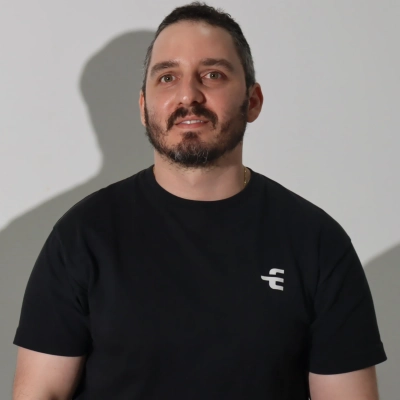
Louis Ducruet — Founder and CEO, Eprezto
Segment Vendors To Preserve Revenue Continuity
At Eprezto, we apply this thinking to our technology and service vendor decisions rather than physical supply chains, but the tradeoff is identical, volume discounts and simplicity pull you toward consolidation while resilience demands diversification.
Our approach is to categorize every vendor relationship into two buckets: replaceable and critical. Replaceable vendors are ones where switching costs are low and alternatives are readily available. For those, we consolidate aggressively because the discount is real and the risk is minimal. If a replaceable vendor fails, we can move to an alternative within days without significant disruption.
Critical vendors are different. These are the ones that touch revenue generation, customer experience, or data infrastructure. For critical vendors, we always maintain at least one viable alternative, even if it costs more. The premium we pay for that optionality is essentially insurance against a single point of failure shutting down a core business function.
The sourcing decision that best illustrates this was our approach to SEO tooling. We had an opportunity to commit to a single platform at a significant annual discount. The savings were attractive and the platform covered most of our needs. But our SEO function directly drives revenue, and relying entirely on one tool meant that an outage, a pricing change, or a feature removal could disrupt our most important growth channel.
We accepted the tradeoff of paying full price for two tools instead of a discounted price for one. The primary tool handles our daily workflow. The secondary tool serves as both a validation layer and a backup. When the primary tool had a data discrepancy that led us toward a wrong strategic decision, the secondary tool caught it. That single catch was worth more than the annual savings we would have gained from consolidating.
The rule of thumb we follow is that volume discounts are worth pursuing until the cost of a vendor failure exceeds the savings from consolidation. For anything that directly generates revenue or serves customers, resilience wins over savings every time. For everything else, consolidate and take the discount.
The mistake most businesses make is applying the same sourcing logic to every vendor. Not every relationship carries the same risk. The key is knowing which ones can afford to break and which ones cannot.

Joe Spisak — CEO, Fulfill.com
Pay For Optionality In Logistics
We lost a $2.3M customer in 2019 because we single-sourced our corrugate from one supplier who couldn't deliver for three weeks during a shortage. That hurt. But here's what I learned running a 140,000 sq ft facility: the math on multi-sourcing isn't what most people think.
Everyone talks about resilience like it's free. It's not. When I ran my fulfillment operation, we paid 18% more per unit on packaging by splitting orders across three suppliers instead of consolidating with one. The volume discount hit was real. But you know what else was real? When our primary carrier had a regional hub fire, we rerouted 40,000 packages in 72 hours because we'd maintained relationships with four other carriers. Our clients didn't even notice.
The tradeoff I accepted that actually worked: I paid 12% more for warehouse management software by going with a provider that had API connections to 50+ carrier and inventory systems instead of the cheapest option that only integrated with three. Seemed expensive until a major client wanted to switch from ShipStation to ShipHero mid-peak season. We made the change in four days instead of four weeks. They stayed with us for three more years.
Single-sourcing works when you're buying true commodities where switching costs are zero. But in fulfillment and logistics, everything is interconnected. Your WMS talks to your carriers who integrate with your clients' platforms. One weak link kills you.
The real question isn't single versus multi-sourcing. It's whether you're paying for optionality in the right places. I'd rather pay 10% more on technology that gives me flexibility than save 20% on a supplier relationship that locks me into their ecosystem. Because when something breaks, and it always does, the cost of being stuck makes that discount look tiny.
At Fulfill.com, we see brands make this mistake constantly. They choose the 3PL offering the lowest per-order price, then discover they can't switch ERPs or add a Canadian warehouse without rebuilding everything. True cost shows up when you need to move fast.

Keagan Stapley — Owner, NYC Meal Prep
Multi-Source Key Ingredients To Protect Consistency
I think the best supplier strategies optimize for consistency, not just the lowest unit cost. Volume discounts can look attractive, but in a service business like NYC Meal Prep, a single supply disruption can end up costing far more in delays, substitutions, or client dissatisfaction. I usually multi-source for ingredients that directly affect reliability or menu flexibility, even if the pricing is slightly higher, and reserve larger volume commitments for stable staples with predictable availability. One decision that reduced overall risk was intentionally splitting sourcing for key fresh ingredients across multiple vendors instead of consolidating with one supplier for a bigger discount. The tradeoff was a slightly more complex ordering process, but it gave us backup options during shortages and helped maintain delivery consistency without scrambling for replacements at the last minute.

Rory Keel — Owner, Equipoise Coffee
Adopt Hybrid Approach To Prevent Stockouts
At Equipoise Coffee, we've wrestled with this tension constantly. Single-sourcing a specific lot from one farm gives us incredible quality consistency and better pricing when we commit to larger volumes. But we learned the hard way that putting all our eggs in one basket with green coffee sourcing is risky business.
A few years back, we were buying almost all our Ethiopian Yirgacheffe from one cooperative we'd built over three harvests. The volume discounts were sweet, and the quality was exactly what our customers expected. Then political instability hit that region hard during harvest season. Shipments were delayed by months, and we couldn't get that specific lot at all. We were scrambling.
Now we use a hybrid approach. For our core offerings like our house blends, we multi-source similar profiles from two or three origins. We might buy from Colombia, Guatemala, and Peru for a balanced component. If one origin has issues, we can adjust the blend ratios. Yes, we pay more per pound than if we committed everything to one supplier. But we haven't had a stockout situation since making this change.
For our limited micro-lot releases, we single-source because the whole point is that specific farm's unique terroir. We accept the risk there, but we don't position those as permanent menu items.
The clearest tradeoff decision we made was deliberately overpaying on our secondary Colombian supplier relationship. We buy about 30% of our Colombian volume from them at roughly 40 cents more per pound than our primary. That supplier barely gets used most months. But when our main supplier had quality issues last spring, we seamlessly shifted volume and didn't miss a single wholesale delivery. That premium cost us maybe $2,400 annually. One missed wholesale account delivery would have cost us triple that in lost revenue and reputation damage.

Pratik Singh Raguwanshi — Manager, Digital Experience, LiveHelpIndia
Split Critical CX To Avoid Outages
Often, what seems to be a spreadsheet gain from efficiency is simply a concealed risk in the guise of a spreadsheet benefit. Using one supplier excessively does not lead to the creation of a supply chain but rather one source of failure, which will ultimately cost you more in the long run than any savings you obtained through bulk purchasing. Decision-makers are frequently blinded by their inability to see the instability of their company's operations due to the lure of cheaper prices that come from volume pricing.
We moved a critical CX function from a single-source model to a 70/30 split between two suppliers located in different geographical regions. We took a 5% increase in the cost of operation to mitigate the risk of experiencing a complete outage because of a regional electrical or internet outage. This move unequivocally resulted in a reduction of total cost since we no longer had to pay the exorbitant costs associated with the emergency downtime, crisis management, and recovery efforts required after an occurrence of an event at a single point of failure.
Resilience does not entail an expense but instead represents an insurance policy against potential losses to one's bottom line. If you are always stressed about your single supplier failing, you are not creating a cost-optimized business; you are compromising your long-term viability in exchange for short-term vanity metrics. A real operation is about establishing the balance required to sustain business continuity when things inevitably fail.

Faiz Ahmed — Founder, GpuPerHour
Diversify GPU Supply To Safeguard Availability
The sourcing decision that most clearly reduced our total risk was splitting our GPU supply across multiple providers even though consolidating with a single provider would have given us a twenty percent volume discount. The trade-off was real and the math was not obvious, but the resilience benefit has proven far more valuable than the cost savings we left on the table.
At GpuPerHour, our marketplace depends on having GPU inventory available when customers need it. If we had concentrated our supply relationships with one or two large providers, any disruption to those providers would have left our entire customer base without compute resources. The volume discount from single-sourcing was attractive on a spreadsheet but catastrophic as a risk model.
The framework I use for balancing volume discounts against resilience has three components. First, I calculate the cost of a supply disruption in terms of lost revenue and customer churn, not just in terms of the immediate gap. When a customer cannot get GPU compute from our marketplace at a critical moment in their model training cycle, they do not just pause. They find an alternative and many never come back. That customer lifetime value loss dwarfs any per-unit savings from volume consolidation.
Second, I evaluate suppliers on switching cost rather than just unit price. A supplier offering a fifteen percent discount but requiring proprietary integration creates a dependency that makes future multi-sourcing more expensive. A supplier offering a smaller discount but using standard interfaces preserves optionality.
Third, I maintain what I call a seventy-twenty-ten split. Seventy percent of volume goes to the primary supplier to capture reasonable volume pricing. Twenty percent goes to a secondary supplier to maintain a proven alternative. Ten percent rotates among newer suppliers to continuously evaluate emerging options. This structure captures most of the volume discount benefit while maintaining genuine supply resilience.
Faiz Ahmed
Founder, GpuPerHour